THE SCREEN
A sieve on a frame
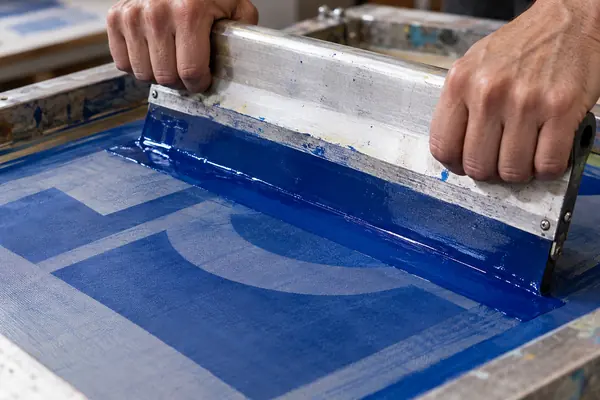
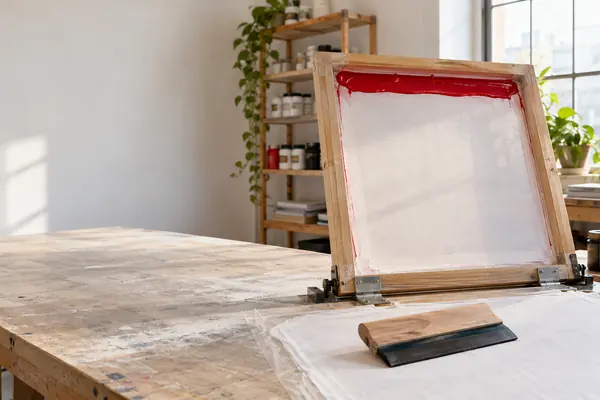
The screen is a woven mesh, originally silk, now usually nylon or polyester, stretched taut over a wood or metal frame hinged to a table.
Pick a stencilHOW SCREENPRINTS ARE MADE
A screenprint is a stencil with a very fine sieve behind it.
Ink is pushed through a tightly stretched mesh wherever the stencil leaves it open, landing on the paper or fabric below. Museums from Tate to the V&A describe the same simple steps, repeated once for every colour.
PULL at 45 degrees
THE SHORT ANSWER
Every screenprint uses the same idea.
Only the stencil changes.
THE SCREEN
The screen is a woven mesh, originally silk, now usually nylon or polyester, stretched taut over a wood or metal frame hinged to a table.
Pick a stencilTHE PULL
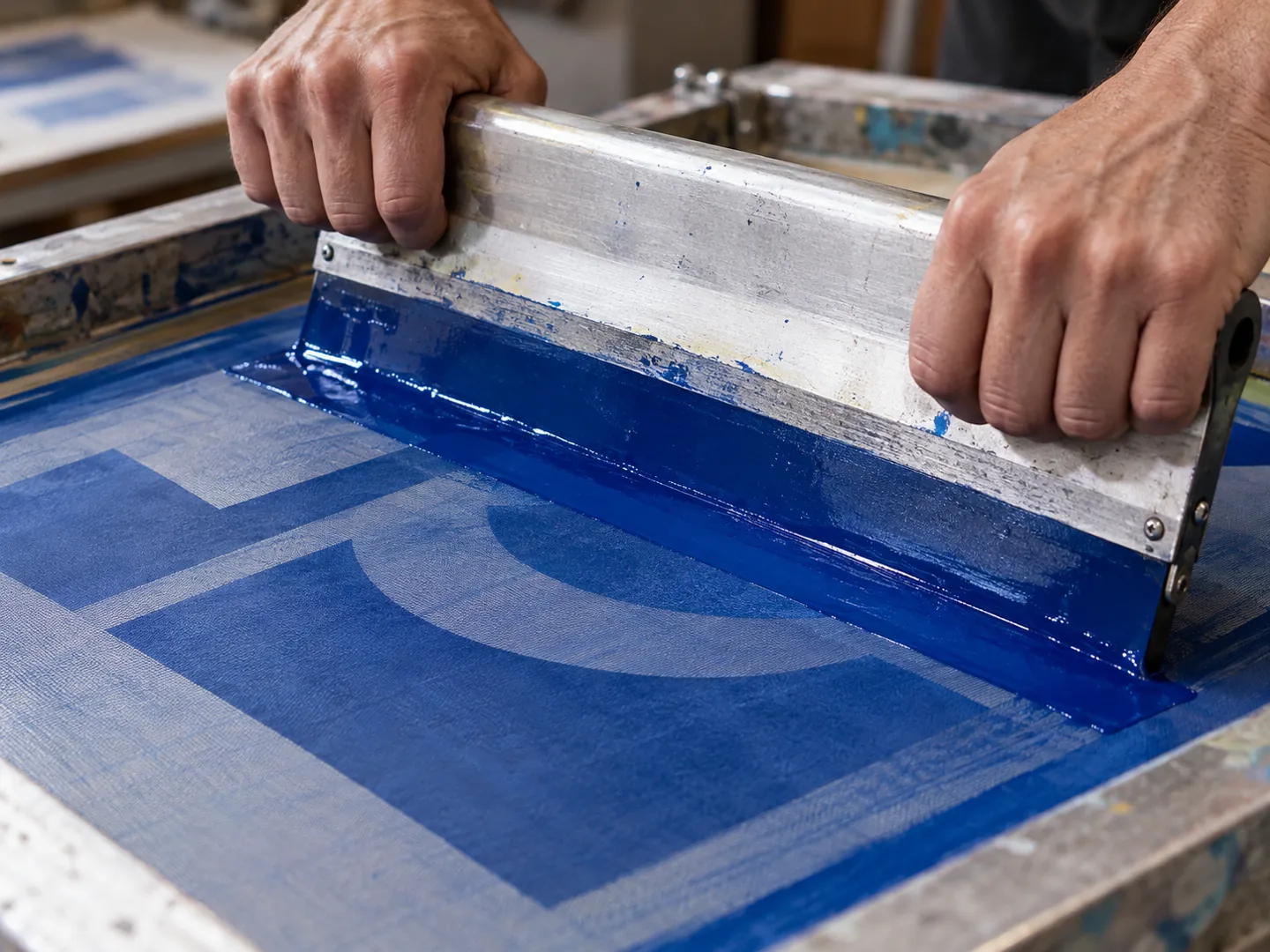
The first pass of the squeegee spreads ink evenly without pressing. The second pull pushes it through the open mesh onto the paper below.
The stepsTHE COLOURS
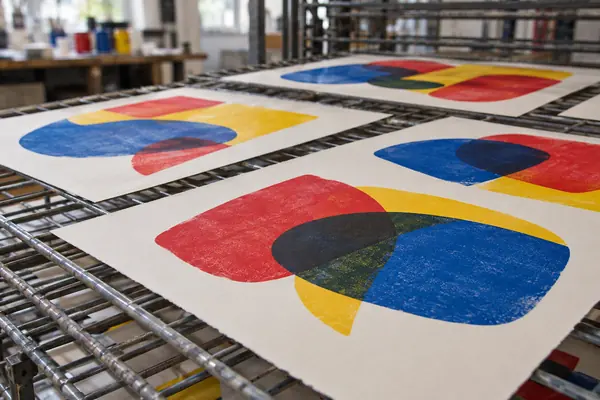
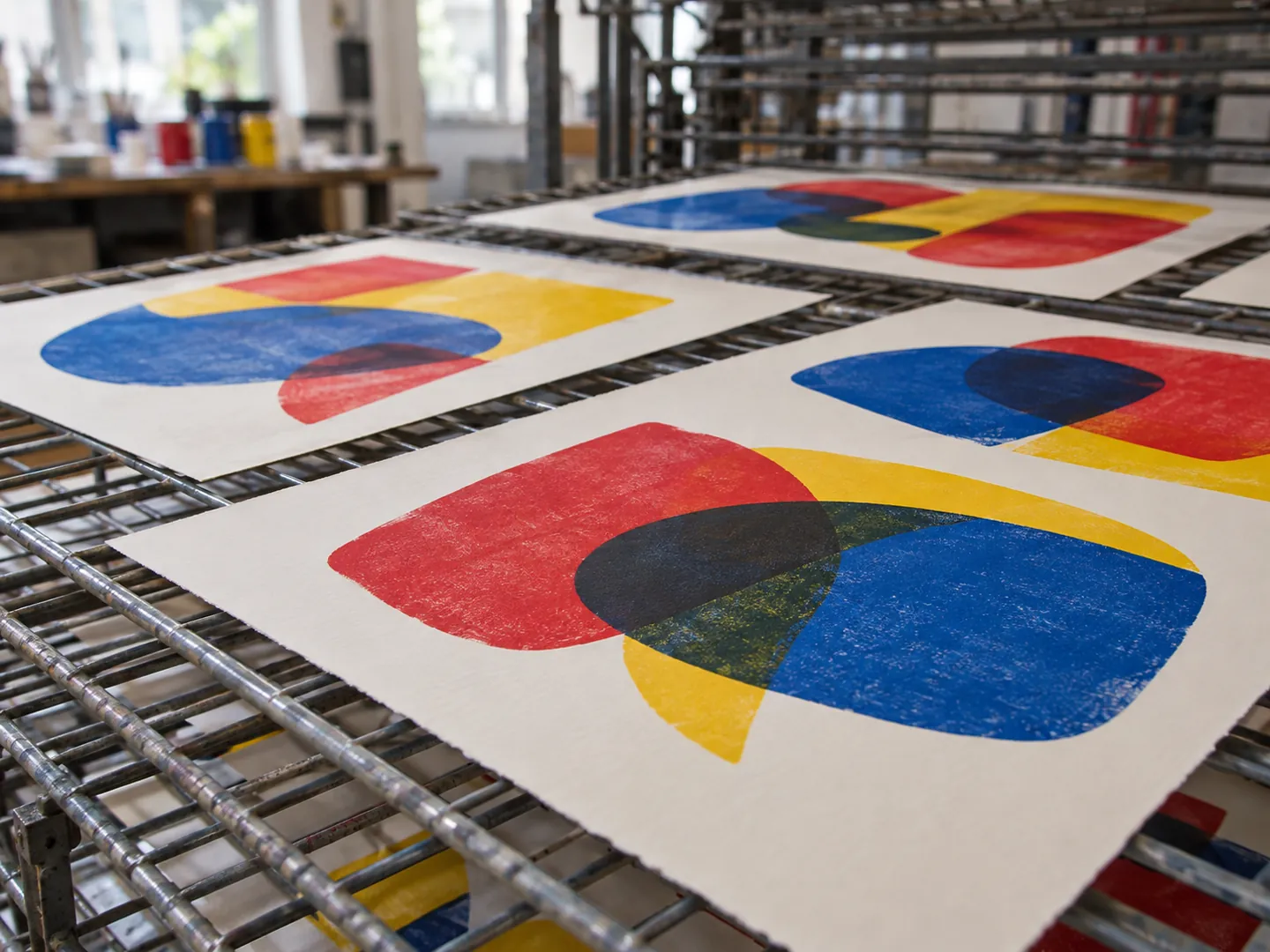
Each colour needs its own stencil and its own run. Every sheet is printed in one colour and left to dry before the next colour goes on.
See the numbersA QUICK STENCIL CHECK
Pick a stencil method to see how it works. The bar shows roughly how much equipment each one needs, from a sheet of paper to a darkroom.
All four methods share the same principle: blocked areas stay blank, open areas let the ink through.
TWO NUMBERS WORTH KNOWING
One date for where it started,
one angle for how it is done.
≈ 1890
Screenprinting first used for signage
The V&A says screenprinting was used from about 1890 in America and England to make signs, spreading to fabric printing and advertising after the 1914–18 war.
ORIGINS · V&A
45°
Angle of the squeegee in a printing pull
In the V&A's demonstration of a six-colour print, the artist pulls the squeegee at a 45 degree angle across the screen, with the paper underneath.
TECHNIQUE · V&A
Tate notes that artists in America began using screenprinting in the 1930s, when the word serigraph was coined to mark an artist's print, and that it has been widely used in printmaking since the 1950s.
HOW A PRINT IS PULLED
This is the sequence the V&A shows in its film of a limited-edition screenprint being made.
Trace each colour of the design onto its own sheet of semi-transparent drafting film, in black ink.
Coat a clean screen with light-sensitive emulsion, lay the film on it, expose it to light and wash out the soft areas.
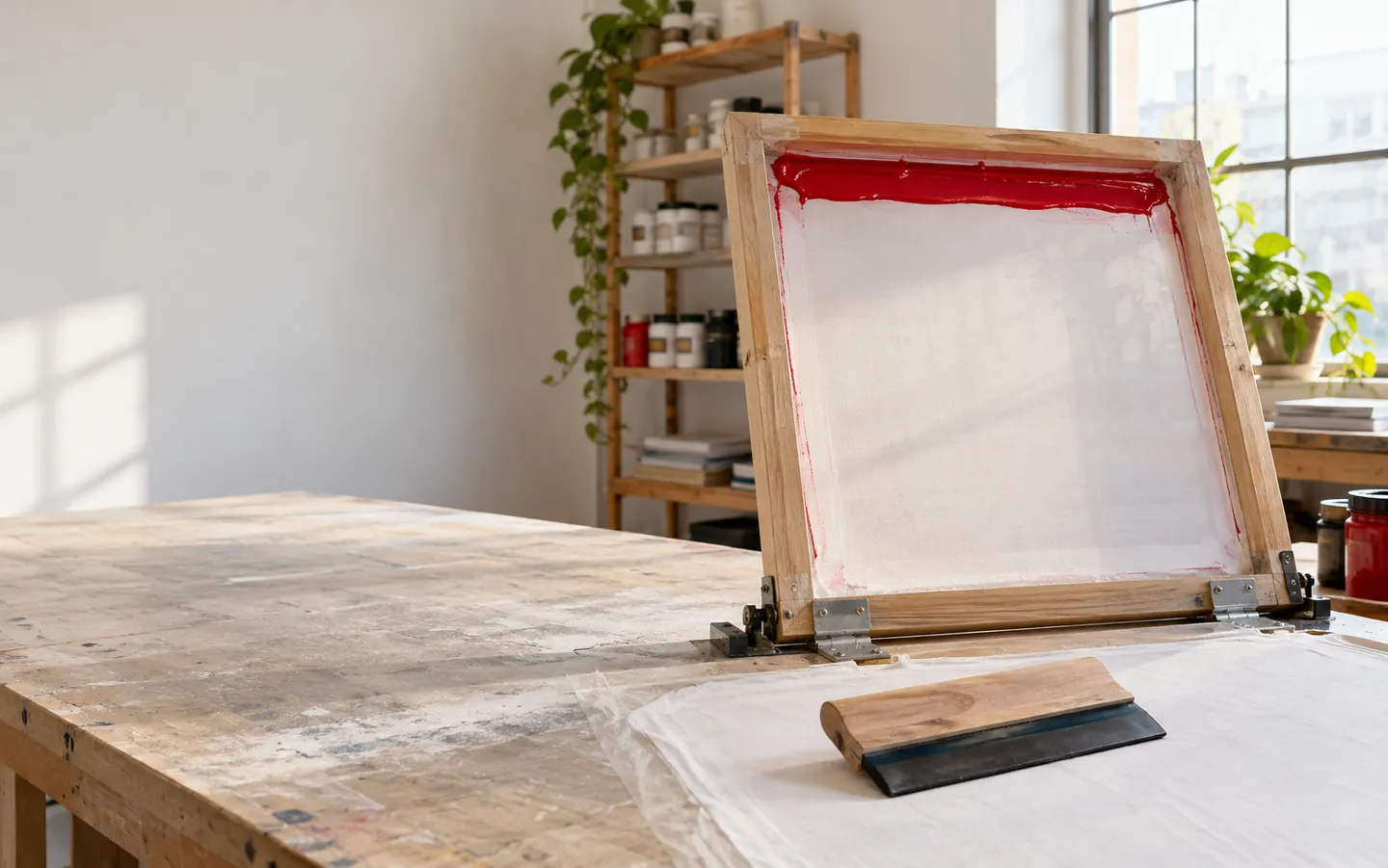
Fix the screen to the table on its hinge and place each sheet against registration marks so the colours line up.
Spread the ink with a light first pass, then pull firmly to print. Dry every sheet before the next colour.
CLEANING UP
For print workshops, the Health and Safety Executive warns that frequent contact with the solvent-based substances used in printing can cause dermatitis, and that breathing high concentrations of some solvent vapours can cause dizziness and drowsiness.
Its guidance on cleaning screens says to use waterborne products wherever possible, scrape screens as clean as possible before cleaning, avoid wiping screens by hand and work with good ventilation. Always check the product's safety data sheet.
Questions
Yes. Tate says the term silkscreen, from the silk originally used for the mesh, is common, particularly in America. Today's mesh is usually nylon or polyester.
Each stencil only lets ink through where one colour should go. The V&A notes that a separate screen is needed for each colour, though overprinting can create extra colours without more screens.
A tool with a flexible rubber or plastic blade used to pull ink across the screen and force it through the open parts of the mesh.
Tate says the term serigraph was first used in 1930s America to mark a screenprint made by an artist, as opposed to commercial work.
Lining up each sheet in exactly the same place for every colour. Printers fix registration marks on the table so each colour prints in the right relation to the last.
Sources
ABOUT THIS NAME
screendoodles.com is part of the DoodleSale portfolio. It isn't in an auction right now, but you can ask about leasing it.